Senior Quantitative UX Researcher
JPMorganChase, New York
I’m interested in the gaps between what people need, how products behave, and what the data can explain.
My research spans instrumentation and behavioral data, surveys, interviews, usability testing and concept testing. I’ve lived across countries and co-founded watched., a movie and TV discovery app, with two longtime friends. This is the journey that brought me here.
The journey runs backwards: from New York, today, to Singapore, where it began.
New York
At JPMorganChase, I study how we make sense of behavior in Payments products and bounded multi-agent workflows. My work includes assessing the quality of interaction data and developing an approach to AI-agent evaluation.
- Senior Quantitative UX ResearcherJPMorganChaseJune 2026 to present · New York
Data Instrumentation Coverage and Quality
JPMorganChase · Payments
Some interaction data recorded activity without enough context to explain it. A tag called “search” on a page with several search bars couldn’t tell us which one someone used. Other interactions needed instrumentation altogether.
I created a cross-product HTML dashboard to distinguish coverage gaps from unusable tags, with product-level analysis and a resumable pipeline designed for reuse.
- Contribution
- I created the dashboard and the assessment pipeline.
- Status
- Dashboard and pipeline created · being publicized
Three different searches produce one identical record, and the button produces none. Quality and coverage are different problems.Illustration of the idea, not the internal dashboard. Evaluating bounded multi-agent workflows
JPMorganChase · Bounded multi-agent workflows
A bounded multi-agent workflow can return the right answer while taking unnecessary steps and making tool calls that add cost. Evaluating the result alone can miss those problems.
With my manager, I’m developing an evaluation approach to help identify whether a breakdown comes from the user or the agent. I don’t design the agentic experience used to test it.
One challenge is defining what a human concept such as frustration means when applied to agent behavior. Turning it into something observable in an agent doesn’t assume the agent feels anything.
- Contribution
- Developing the approach with my manager. I don’t design the agentic experience used to test it.
- Status
- Research in development · concept stage
Both runs are correct. Only one of them is efficient, and judging the result alone can’t tell them apart.Illustration. Internal signals and definitions are not shown.
From New York to Plano.
Continue to Texas: careerTexas: career
Before moving to New York, I worked on another team at JPMorganChase in Texas.
In Texas, my work at Chase focused on the moments when people needed to find their way through a banking experience. I used usability research and interviews to understand where they struggled and what teams could improve.
- Experience Research Senior AssociateJPMorganChaseNovember 2024 to June 2026 · Plano, Texas
Chase Mobile Entry Points
JPMorganChase · Usability research
How people enter an experience can shape whether they complete the task they came for. I used unmoderated usability testing to investigate friction in Chase mobile entry points and identify opportunities to improve navigation.
The research informed recommendations for design and prioritization, connecting the difficulties people encountered with the changes teams needed to consider.
I also researched assisted account opening, using moderated interviews to understand username-related challenges and cross-selling friction. The findings informed design strategy for the experience.
- Contribution
- I ran the usability research and the interviews.
- Status
- Research completed · recommendations for design and prioritization
From Plano to Santa Clara.
Continue to Silicon ValleySilicon Valley
After a summer internship at Chegg in Silicon Valley, I returned to Texas and kept working with Chegg remotely until I joined Chase. I was one of two interns who moved into a contractor role.
That work included studying how AI-powered academic support could fit into students’ existing Discord routines.
- UX Researcher II, contractorCheggAugust to November 2024 · Remote from Texas
Chegg Discord
Chegg · Discovery and concept evaluation
Students already used Discord to study together. We wanted to understand what academic support should look like within that environment.
Through discovery research and concept testing, I explored homework help, math solving and quiz generation. The findings gave the concepts different next steps.
- Contribution
- I ran the discovery research and the concept tests.
- Status
- Discovery and concept testing completed · recommendations for alpha and iteration
Concept What students raised Next step Homework help Wanted detailed answers inside Discord, not a link elsewhere Toward alpha Math solving Entering an equation was friction, and they expected image-to-text Iterate first Quiz generation Wanted explanations for wrong answers, and a timer Toward alpha Each concept got its own next step. How students expected to enter questions and receive answers came up in all three.Summary of the recommendations, not the research deck.
Before that: the summer in Silicon Valley
In the summer of 2024, I interned at Chegg in Silicon Valley, working on understanding students’ needs and evaluating learning experiences.
- UX Research internCheggJune to August 2024 · Santa Clara County, California
Chegg Mexico
Chegg · Mixed-methods localization research
Localizing a learning product meant understanding how students studied, the support they relied on, and how they moved between languages.
Interviews revealed that students searched in both Spanish and English. I recommended that a Spanish search could retrieve a relevant answer from Chegg’s English database.
- Contribution
- I worked across the survey and interview phases and made the cross-language search recommendation.
- Status
- Mixed-methods study completed · cross-language search implementation reported
Students searched in both languages, so a Spanish question should be able to find an English answer.Illustration of the recommendation, not the chegg.mx interface.
From Santa Clara to Atlanta.
Continue to AtlantaAtlanta
During my master’s degree, I spent a summer in Atlanta with Inspire Brands. I worked with survey data and advertising analysis to understand consumer responses, bringing quantitative research into a different product context.
The work included checking survey response quality and running a regression analysis of advertising attributes.
- Quantitative Consumer Insights internInspire BrandsJune to August 2023 · Atlanta, Georgia
Inspire Brands Ad Creative
Inspire Brands · Quantitative advertising research
Which creative attributes of quick-service restaurant TV ads go with higher ACE Metrix scores?
I coded 548 ads on 21 yes-or-no attributes and modeled each score against them in R.
- Contribution
- I defined the attributes with the head of Demand Gen Analytics, coded all 548 ads, ran every regression in R and presented the readout.
- Status
- Analysis completed · readout presented August 2023, used to inform creative guidance
Creative choices become yes-or-no codes, and each score is modeled against them.Illustration of the method, not the readout.
From Atlanta to Richardson.
Continue to Texas: educationTexas: education
Texas is where I completed my undergraduate and master’s degrees at the University of Texas at Dallas.
I studied neuroscience and psychology, then Applied Cognition and Neuroscience with a specialization in Human-Computer Interaction. Those fields provide different ways of understanding how people think, behave and interact with technology.
- MS, Applied Cognition and Neuroscience · HCI specialization · 2022 to 2024
- BS, Neuroscience and Psychology · 2018 to 2022
From Richardson to Singapore.
Continue to SingaporeSingapore
Singapore is one of the places I’ve called home, and a core part of who I am.
This part of the journey moves beyond my professional timeline. Films, television and longtime friendships are part of my life, too. One project brings those interests together: watched.
watched.
Cofounder · Research, product and front-end
Choosing what to watch was a problem my friends and I kept coming back to. Recommendations often felt generic or disconnected from our taste, so we co-founded watched., a movie and TV tracking and discovery app.
It starts with Liked, Meh or Disliked, then asks you to compare titles within the same bucket.
- Contribution
- Cofounder: research, product and interaction design, and front-end work, with two technical cofounders.
- Status
- Launched project · currently paused
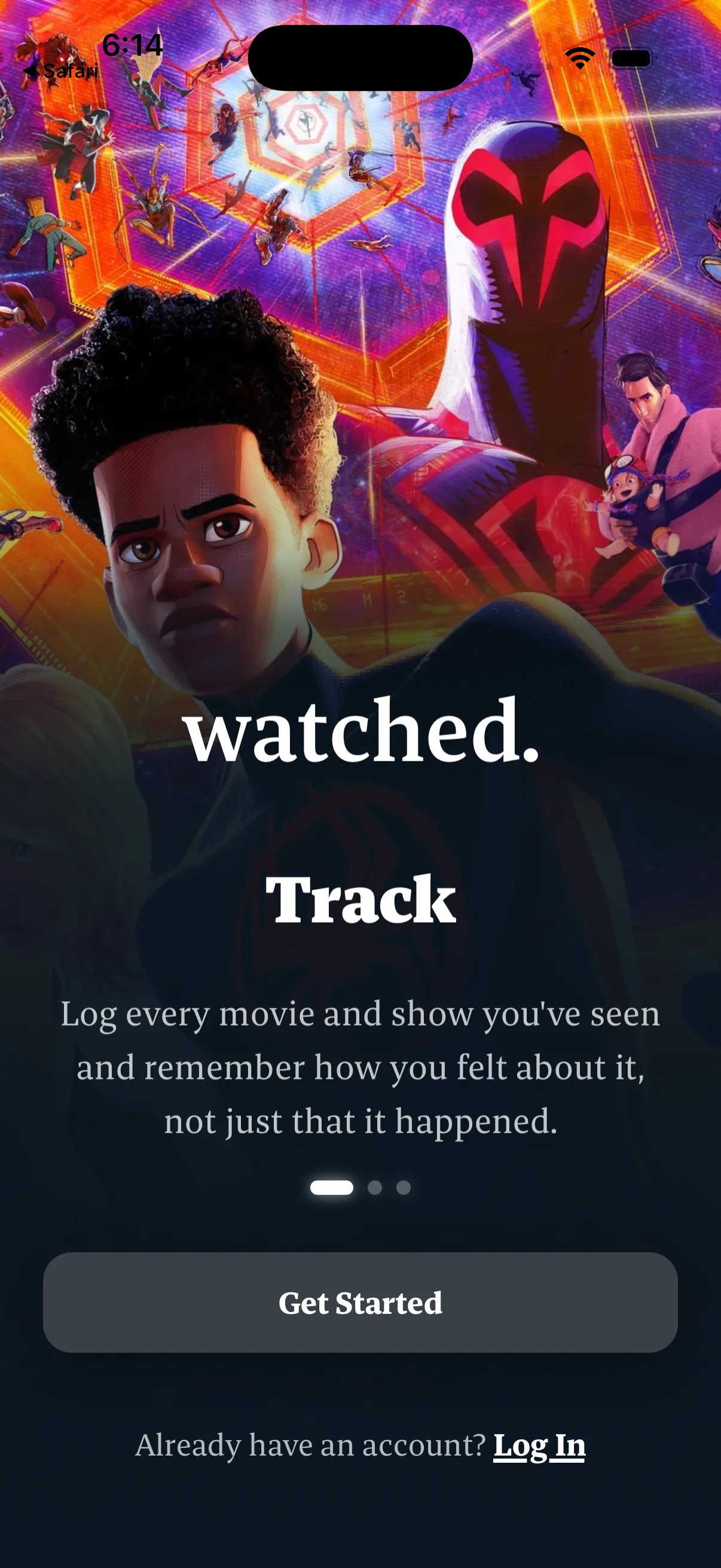
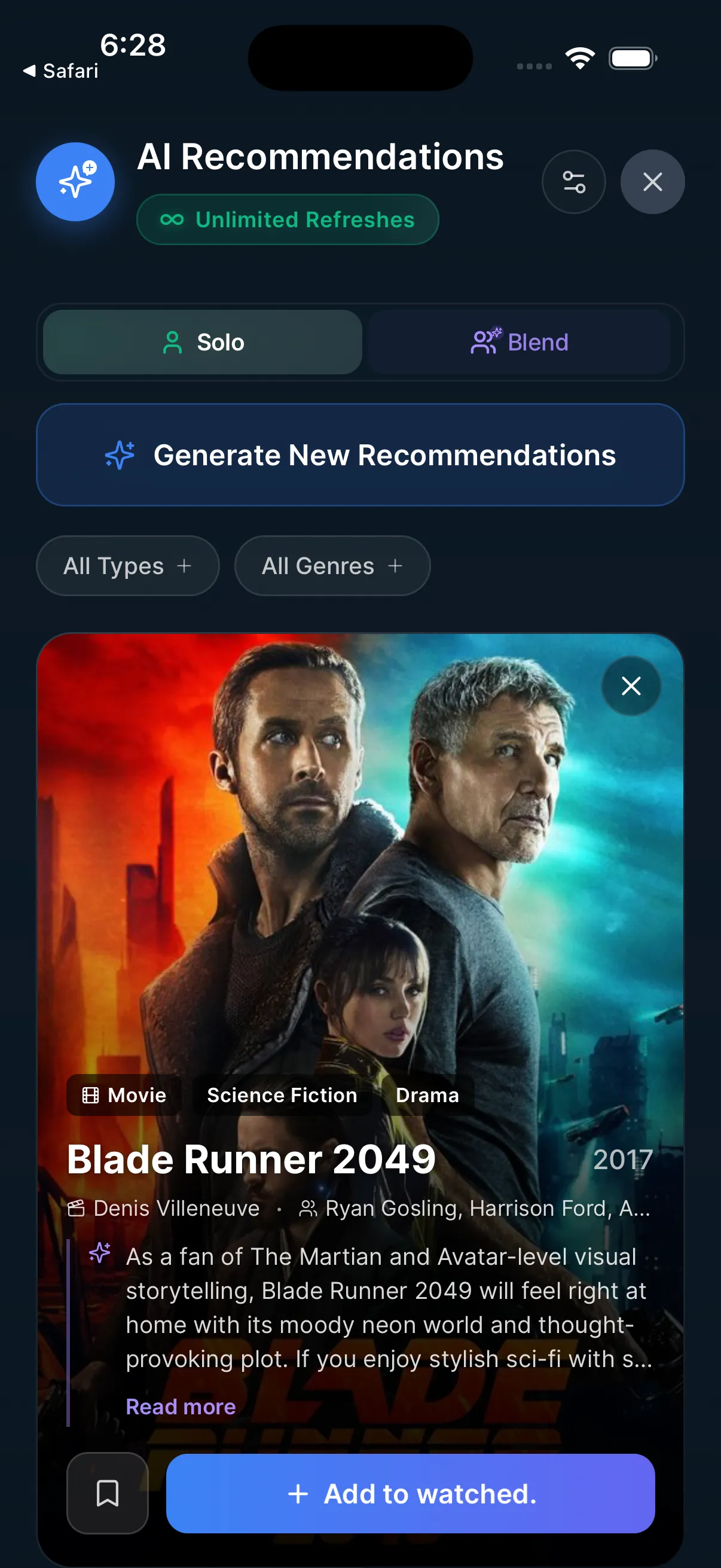
Screens from the App Store listing, before the pause.
Your visit, as this site saw it
This is everything this site could observe. It can’t tell me what you were looking for, so I’d rather ask.
Thanks for taking a look around. If you’d like to talk about research, AI experiences or something we could build together, I’d be glad to hear from you.
0 s on this site, up to here
You haven’t spent a second in any chapter.
No cases opened yet.
With scripts off, this site observed nothing, so there is nothing to chart.
About this site
It asks of its visitors the question my instrumentation work asks of products: what can a record show, and what can’t it? The notes and the readout keep to what they can see, say what they can’t tell, and never leave your browser. I directed it and confirmed every claim on it; AI coding tools wrote the code, which is public on GitHub .